
Smoke in the room is a symptom
The call usually starts with "it smokes when I light it" or "the house smells like a campfire the next morning." Neither sentence names a broken part, and that is the point. Smoke curling out past the mantel only tells us the chimney is not pulling the fire's exhaust up and away fast enough. There are half a dozen reasons a chimney stops pulling. A few cost nothing to put right. A couple cost several thousand dollars. A price only makes sense once the cause is known, so this guide covers how Iverson Chimney Company finds the cause in Pomona homes and what each fix costs where we publish a figure.
The usual causes, cheapest first
- A damper that is only part open. The handle says open, but a worn pin or a warped plate leaves it half shut. Often the cure is an adjustment during the visit.
- A passage narrowed by soot. Years of fires coat the inside of the chimney. A thick, rough layer slows the smoke and cools it, and cool smoke rises poorly.
- Something lodged in the flue. Bird nests, palm fronds blown in by Santa Ana winds, a piece of broken tile or a collapsed screen from an old cap.
- A house that is short of air. A fire needs air to replace what goes up the chimney. A tight modern house with a range hood, bath fans and a dryer running can pull harder than the chimney does, and the room wins. Smoke comes back down.
- A flue too small for the opening. Certain Pomona fireplaces pair a broad, high mouth with a narrow flue. They smoke from the first fire to the last, however often they are swept.
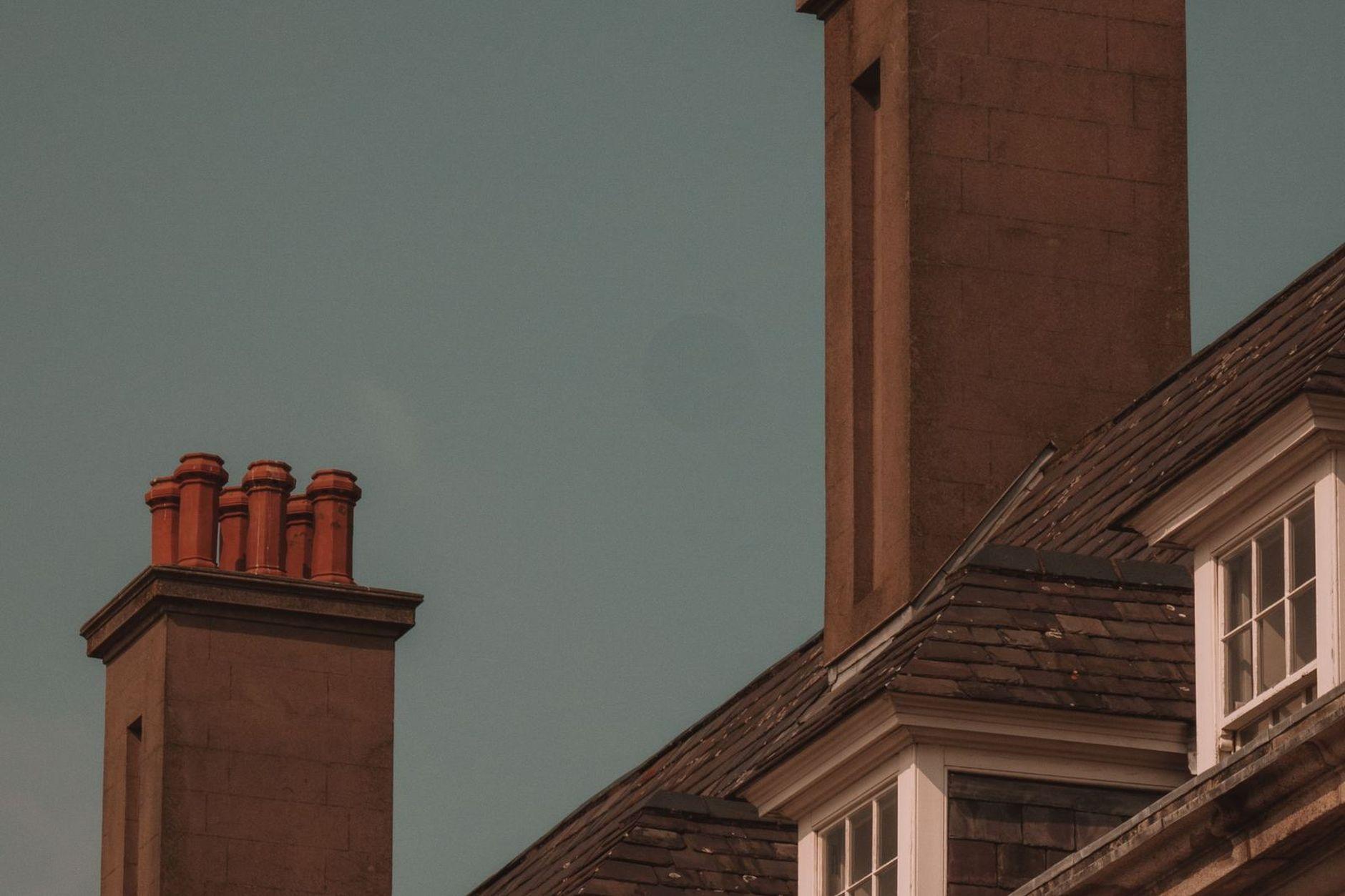
- A chimney too short for the roof around it. Wind rolling over a higher ridge, a second-story addition or a tall tree pushes down into the top.
- A cracked or broken liner. Gaps let the smoke cool and leak, and the draw weakens with every crack.
Most smoky fireplaces we see have one main cause and one helper, for example a heavy soot layer plus a kitchen hood that runs while the fire burns.
What it costs to find the cause
A Level 1 inspection is $55. It covers what we can reach and see: the firebox, the damper, the throat above it and the top of the chimney from the roof. For smoke trouble that is often enough, because a stuck damper, a blockage or a thick coat of soot shows up at that level. If the light stops at a bend, or the tile looks broken, the next step is a Level 2 at $395, which sends a camera up the full height and records the lining.
We add a smoke test with the house set the way you live in it: hood on, bath fan on, doors shut. Watching where the smoke goes with those fans pulling answers the air-supply question faster than any gauge. If opening a window a crack cures the smoke, the chimney may not be the problem at all, and we tell you so.
Fixes that carry a published price
| Fix | Price |
|---|---|
| Sweeping out soot that narrows the passage | from $425 |
| New top for a chimney that catches wind or debris | quoted after we measure |
| Swapping the open fire for a sealed gas heater in the same opening | $2,850 to $5,700 |
Other remedies have no published figure: a damper that seals at the top of the chimney, a new damper plate, a stainless liner sized to the opening, glass doors that shrink the opening, a taller chimney, or a way to bring outside air to the fire. Each one depends on the chimney's height, the shape of the flue and what the camera shows. We write those prices onto the report from the same visit, so you see every option side by side.
What decides your figure
Three things move the total more than anything else.
1. One cause or several. A fireplace with a sticky damper and a heavy soot coat needs both dealt with. Curing one and leaving the other usually leaves the smoke. 2. The state of the liner. A sound liner keeps the job small. A cracked one turns a sweep into a liner job. 3. The house and the roof. A two-story home on a Diamond Bar hillside puts the top of the chimney far higher than a single-story ranch in Pomona, and the reach and setup shape the labour.
Tell us when the smoke shows up and what is running in the house at the time, and we call back with the visit that fits, usually a Level 1 to start.
Gas fireplaces smell and smoke too
A gas fireplace should never put soot on its glass or a smell in the room. When it does, the cause is usually a blocked vent, a burner set wrong, logs knocked out of position or a vent cap bent by wind. That work sits under gas fireplace repair and starts with the same question: where is the exhaust going?
When to leave it cold
Smoke in the room carries carbon monoxide along with the soot. If the fireplace smokes every time you light it, or a CO alarm has sounded while it burned, stop using it until it has been looked at. A fireplace that smokes only while the first log catches and then settles is a lower concern, but it is still telling you the draw is weak.
Why the cheap fixes come first
We start with the damper, the soot and the air supply because they are the most common causes and cost the least. If one of them cures the smoke, you have spent the price of an inspection and perhaps a sweep. Only when those are ruled out do we talk about liners, taller chimneys or gas conversions. That order keeps a homeowner from paying for a liner that a damper adjustment would have made unnecessary.
More on the work itself sits on our fireplace repair and chimney sweep pages. If the smoke turned up while you are selling, our note on selling with a smoky fireplace covers the paperwork side.
Reaching us
Fireplaces in Pomona, San Dimas, Diamond Bar and Corona that smoke, smell or sulk are our daily work. Head to the contact page, say what the smoke does and when, and we set up the first visit.
Rather Have Someone Watch the Smoke for You?
Iverson Chimney Company lights a test fire, works the damper, measures the flue against the opening and checks the cap, then tells you in plain words what is wrong. Visits run from Pomona to San Dimas, Diamond Bar, Corona and the towns between.